

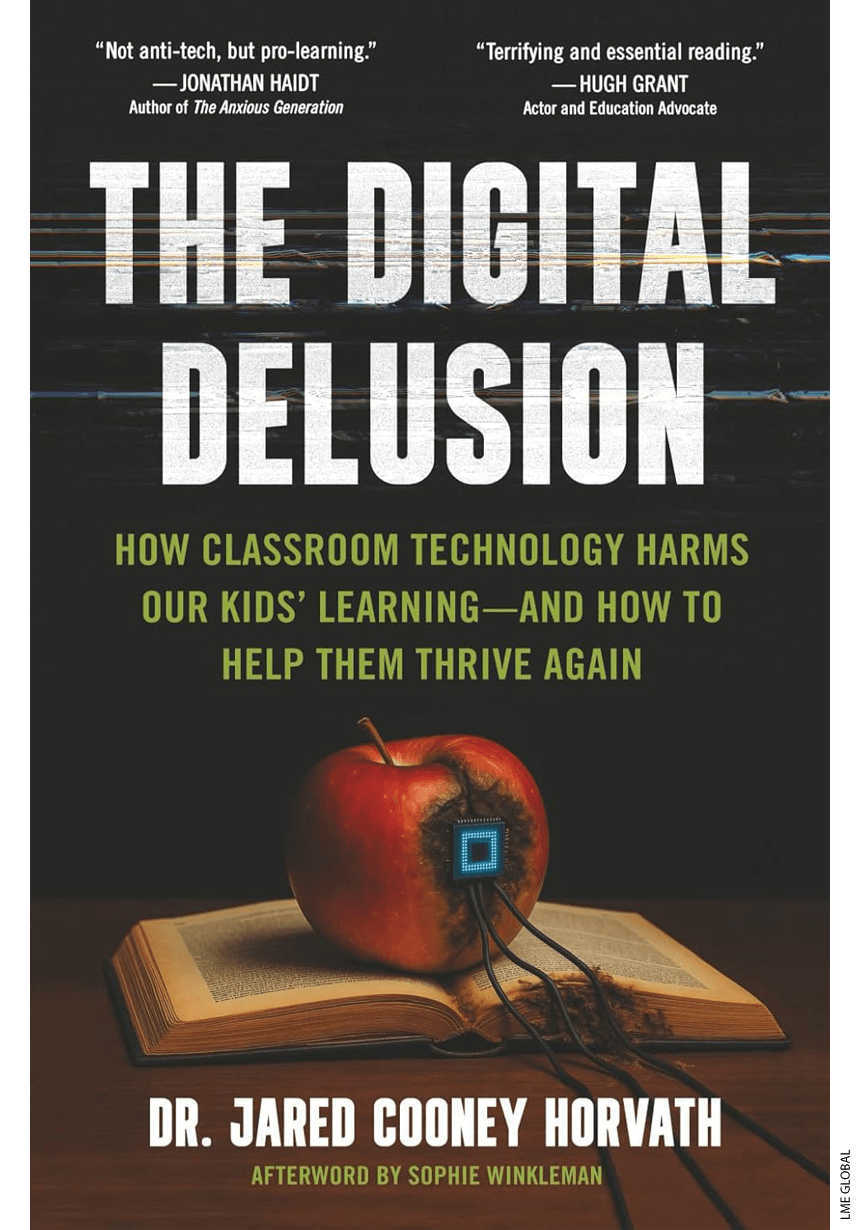
PART ONE: Chapter-by-Chapter Logical Mapping
Prologue: The Luddite Warning
Core Claim: The Luddites weren’t technophobes but defenders of human practices threatened by industrial tools—a warning relevant to modern educational technology.
Supporting Evidence: Historical reframing of Luddite resistance as values-based rather than ignorance-based. Establishes parallel between 19th-century textile workers and 21st-century educators facing technology-driven displacement.
Logical Method: Historical analogy construction. Horvath uses the Luddites as a framing device to legitimize resistance to EdTech as principled rather than reactionary.
Logical Gaps: The analogy assumes equivalence between industrial machinery (which did increase productivity) and educational technology (which Horvath claims does not). The Luddites ultimately lost—does this foreshadow inevitable EdTech dominance regardless of its efficacy? The opening assumes technology reshapes culture without examining whether any technology has ever been successfully resisted at scale once economically entrenched.
Methodological Soundness: Rhetorically effective but historically selective. The Luddites’ defeat might argue against, not for, resistance strategies.
Chapter 1: Wrapped in Lies—The Five Myths That Built EdTech
Core Claim: EdTech’s adoption rests on five false premises: (1) Education is broken, (2) Multimedia enhances learning, (3) Free choice leads to better learning, (4) Kids learn best on their own, (5) Intelligent tutors make kids intelligent.
Supporting Evidence:
Myth 1: PISA data showing correlation between creativity and knowledge (r = 0.92), international metrics showing education improving until digital saturation
Myth 2: The Oregon Trail anecdote, DuoLingo vs. Babbel comparative study
Myth 3: Fluency illusion experiment (re-reading vs. recall testing), Australian teacher anecdote
Myth 4: COVID remote learning failure, neuroscience of biologically primary vs. secondary learning
Myth 5: Sidney Pressey’s 1926 transfer failure observation, Justin Reich quote on adaptive tutors
Logical Method: Systematic myth-busting through counterevidence. Each myth is stated, then contradicted with research or documented outcomes.
Logical Gaps:
Myth 1: The PISA creativity-knowledge correlation doesn’t prove causation. Singapore’s dual success could reflect cultural factors, selection effects, or measurement artifacts rather than “knowledge → creativity” pipeline.
Myth 2: The Oregon Trail anecdote is N=1 personal recollection, not systematic evidence. The DuoLingo study measures one outcome (standardized test) not engagement sustainability or long-term retention.
Myth 3: The fluency illusion experiment is robust, but the Australian teacher story lacks controls—was the drop due to apps, or other curricular changes that year?
Myth 4: COVID failure proves remote learning failed under crisis conditions, not that self-directed learning is inherently flawed in designed environments.
Myth 5: Horvath correctly identifies transfer problems but doesn’t distinguish between poorly designed tutors (drill-and-kill) and well-designed ones (genuine adaptive scaffolding).
Methodological Soundness: Strong on identifying vendor claims, weaker on distinguishing tool capability from implementation failure. The chapter conflates “EdTech as currently deployed” with “EdTech as theoretically possible.”
Chapter 2: Proof of Failure—What the Data Really Say
Core Claim: International assessments (PISA, TIMSS, PIRLS) and meta-analyses show technology use correlates with declining achievement. Only intelligent tutoring systems and learning disorder interventions exceed the 0.40 effect size threshold for “meaningful impact.”
Supporting Evidence:
PISA 2012-2022: 6+ hours daily computer use = 66-point score drop
TIMSS 2019: Daily use = 41-point math drop, 51-point science drop
PIRLS 2021: Mode effect (paper → digital) = 27-point overall drop
Meta-analysis synthesis: General EdTech ES = +0.29 (below 0.40 threshold)
Specific successes: ITS (+0.52), Learning disorders (+0.61)
Logical Method: Correlation analysis from large-scale assessments, meta-analytic synthesis, threshold benchmarking against Hattie’s 0.40 hinge point.
Logical Gaps:
Correlation ≠ Causation: The PISA/TIMSS/PIRLS data show association, not mechanism. High-tech-use students might be lower-performing for reasons unrelated to screens (reverse causation, confounding variables).
Mode Effect Burial: The claim that OECD “buried” the mode effect by excluding 91 questions is presented as conspiracy but could reflect standard psychometric validation (removing poorly performing items is normal test refinement).
The 0.40 Threshold Problem: Horvath adopts Hattie’s benchmark uncritically. By this logic, class size reduction (ES = 0.21) and teacher professional development (ES ≈ 0.30) are also “meaningless”—a reductio ad absurdum Horvath never addresses.
The “Below Average = Failure” Fallacy: If the average ES is 0.42 (per Hattie), then by definition half of all interventions fall below it. Calling everything sub-0.40 “meaningless” eliminates most of education.
Methodological Soundness: Data reporting is accurate, but interpretation is absolutist. Horvath treats 0.40 as a bright line rather than a guideline, and doesn’t adjust for cost-effectiveness (a 0.30 ES at $50 might be superior to 0.45 ES at $3,000).
Chapter 3: Against the Brain—The Three Intractable Problems
Core Claim: Three biological mechanisms explain why EdTech fails: (1) Attention—screens force task-switching, (2) Empathy—digital tools lack physiological synchrony, (3) Transfer—narrow digital contexts prevent skill generalization.
Supporting Evidence:
Attention: LatPFC can hold one ruleset; multitasking = 2,500 hours/year of switching practice vs. 450 hours learning
Empathy: Student-teacher relationship ES = +0.57, affective empathy ES = +0.68; physiological synchrony requires biology
Transfer: Deep-sea diver memory study, handwriting → typing transfers easily, typing → handwriting does not
Logical Method: Neurocognitive mechanism identification. Each problem is traced to brain architecture constraints that technology cannot overcome.
Logical Gaps:
Attention: The “2,500 vs. 450 hours” comparison conflates recreational screen use (YouTube, gaming) with educational screen use. The mechanism critique applies to distraction-prone environments, not necessarily to well-designed, focused digital tools.
Empathy: The oxytocin/TAC2 research shows text-based communication differs from face-to-face, but doesn’t prove video-based interaction (Zoom with camera) lacks synchrony. The claim that “empathy is impossible” with computers overstates the evidence.
Transfer: The subtractive/additive transfer framework is elegant but doesn’t account for platform-specific skills (e.g., coding, digital research) where the digital environment is the target context, not a stepping stone.
Methodological Soundness: Mechanisms are neurologically grounded but presented as absolutes. The brain science is solid; the leap to “therefore all EdTech fails” is not. Different tools create different cognitive demands—lumping Chromebook-for-YouTube with intelligent-tutor-for-math obscures crucial distinctions.
Chapter 4: Addressing the Apologists—How to Respond to EdTech Evangelists
Core Claim: EdTech advocates deploy eight predictable defenses, all logically flawed: (1) Potential, (2) Need more time, (3) Ubiquity, (4) Digital skills necessary, (5) Modern students learn differently, (6) User error, (7) Competitive pressure, (8) “Just a tool.”
Supporting Evidence: Historical examples (Ford Pinto), meta-analysis timelines (1977 ES = 0.29, 2024 ES = 0.29), digital native myth research, implementation fidelity data.
Logical Method: Argument deconstruction. Horvath anticipates defenses and provides counterarguments.
Logical Gaps:
Apology 2 (Time): The 1977 → 2024 flatline (ES = 0.29) is damning, but doesn’t distinguish between technology generations. Comparing punch-card computers to AI tutors is like comparing bloodletting to antibiotics—same category, different capabilities.
Apology 6 (User Error): Horvath dismisses “it’s being used wrong” but doesn’t engage with the strongest version: that some implementations work well (see Harvard AI tutor study) while most fail. The question isn’t “can it work?” but “does it work at scale without specialized conditions?”
Methodological Soundness: Rhetorically strong, logically sound on weak defenses (ubiquity, digital natives), but strawmans the “implementation quality matters” argument.
Chapter 5: Smartphones—A Special Kind of Bad
Core Claim: Smartphones in schools cause unique, severe harm through three mechanisms: (1) Craving (dopamine-driven compulsion), (2) Consolidation disruption (blocking waking memory replay), (3) Cognitive depletion (preventing mental recharge).
Supporting Evidence:
Mental health: Heavy phone use → anxiety, depression (TAC2 vs. oxytocin)
Physical health: Sedentary behavior, sleep disruption
Learning: Meta-analysis ES = -0.33 (comparable to depression, bullying, TBI)
Phone bans: UK (+0.14 SD), Spain (+0.12 SD), Norway (+0.22 SD)
Logical Method: Mechanistic explanation of addiction pathways, consolidation neuroscience, cognitive load theory. Empirical validation through ban studies.
Logical Gaps:
Craving: The dopamine habit loop is well-established for recreational phone use. Does this mechanism activate for academic phone use (e.g., calculator app, research)? The conflation weakens the universal claim.
Consolidation: The “waking consolidation” research is recent and still debated. The claim that any break-time phone use blocks memory replay overstates current neuroscience certainty.
Ban Studies: All cited studies show correlation (ban → improvement), not causation. Confounds abound: schools implementing bans might also increase recess equipment, teacher training, or other factors.
Methodological Soundness: Strongest chapter. The harms are well-documented, mechanisms are plausible, and ban evidence is consistent across countries. The only weakness is overstatement—presenting probable mechanisms as proven and ignoring potential moderators (age, usage type, duration).
Chapter 6: Artificial Intelligence Part I—The Tool Nobody Asked For
Core Claim: Generative AI (ChatGPT) harms learning through three mechanisms: (1) Offloading (preventing skill development), (2) Higher-order skill erosion (critical thinking requires internalized knowledge), (3) Identity externalization (students mistake AI output for self-creation).
Supporting Evidence:
Meta-analysis 1 (10 studies): ES = +0.58 → cleaned ES = +0.27 (after removing duplicates, non-comparisons)
Meta-analysis 2 (5 studies): ES = +0.43 → corrected ES = -0.08 (after fixing sign error, removing teacher-only study)
Combined cleaned ES ≈ +0.17 (below 0.40 threshold)
Offloading examples: student who never did experiment, inability to recognize AI errors
Identity: Instagram poem anecdote
Logical Method: Meta-analytic critique (exposing methodological flaws), mechanistic reasoning (offloading → dependence), philosophical analysis (externalized identity via Narcissus myth).
Logical Gaps:
Decline Effect Argument: Horvath predicts AI evidence will weaken over time (citing ego depletion, Omega-3, growth mindset examples). This is anticipatory dismissal—using future hypothetical trends to discredit present data. Logically circular.
Vetting Problem: The claim that novices “can’t tell if AI is right or wrong” is true for complex domains but overstated for basic factual errors (students can recognize “2+2=15”). The vetting challenge is real but gradated by domain complexity.
Identity Externalization: The Narcissus analogy is philosophically provocative but empirically thin. The Instagram poem anecdote is N=1. No systematic evidence that AI use causes identity confusion at scale.
Methodological Soundness: The meta-analysis critique is devastating and correct—the existing AI-in-education research is methodologically garbage. The mechanisms (offloading, vetting) are plausible. The identity argument is speculative philosophy masquerading as neuroscience.
Chapter 7: Artificial Intelligence Part II—The Deeper Threat
Core Claim: AI embeds a worldview (Technopoly) that redefines humans as inferior machines and schools as obsolete information organizers. Adopting AI means surrendering education’s meaning-making function to algorithms.
Supporting Evidence: Postman’s three-stage framework (tool-using → technocratic → Technopoly), Socrates/Plato on writing, SAT’s shift from 750-word passages to 75-word snippets, McLuhan/Winner/Ong on tools reshaping consciousness.
Logical Method: Cultural criticism via Postman’s Technopoly framework. Philosophical argument that tools carry embedded ideologies.
Logical Gaps:
The Worldview Claim: Horvath argues AI imposes three tenets: (a) thought = language, (b) language = statistical patterns, (c) only AI can find patterns. This is a characterization of AI ideology, not a proof that users adopt it. Many people use GPS without believing “wayfinding is impossible for humans.”
The Reductionism Slippery Slope: Claiming AI reduces humans to “weak machines” conflates AI capability with human self-conception. Using a calculator doesn’t make you think you’re a bad calculator—it frees cognitive resources for higher-order work.
The SAT Example: The shift to 75-word passages is presented as capitulation to screens, but could reflect valid psychometric goals (reducing reading-speed confounds, increasing question diversity). Horvath assumes causation without evidence.
Methodological Soundness: Philosophically coherent within Postman’s framework but empirically unverifiable. This chapter is cultural theory, not cognitive science—Horvath is no longer proving mechanisms, he’s articulating fears. The argument is possible but not proven.
BRIDGE SECTION: Synthesis of Logical Structure
The Argument’s Architecture
Horvath constructs a nested logical case:
Outer Shell (Chapters 1-2): Empirical demolition
Myth-busting (Chapter 1) + Data bombardment (Chapter 2) = “EdTech doesn’t work”
This layer is strong on correlation, weak on causation
Middle Layer (Chapter 3): Mechanistic explanation
Three biological incompatibilities (attention, empathy, transfer) explain why EdTech fails
This layer is strong on neuroscience, overstated on universality
Inner Core (Chapters 6-7): Philosophical alarm
AI represents Technopoly’s endpoint: humans redefined as inferior to tools, schools surrendering meaning-making function
This layer is culturally provocative, empirically speculative
Tensions Across Chapters
The Implementation Paradox: Chapter 3 argues EdTech fails due to biological incompatibility (immutable brain architecture). Chapter 4 dismisses “user error” defenses. Yet Chapter 5’s smartphone ban studies prove that removing one technology (phones) while keeping another (school computers) produces gains—suggesting implementation, not biology, is the key variable.
The Threshold Contradiction: Horvath uses 0.40 ES as his “meaningful” cutoff, citing Hattie. But Hattie’s own data show class size reduction (0.21), homework (0.29), and professional development (0.30) all fall below this line. If we accept 0.40 as absolute, we must abandon most educational interventions. Horvath never resolves this.
The Transfer Asymmetry: Chapter 3 claims handwriting → typing transfers easily, but typing → handwriting does not (subtractive vs. additive transfer). Yet this implies some digital tools (typing) are acceptable endpoints if students first master analog foundations. Horvath doesn’t develop this implication—he just bans screens wholesale.
PART TWO: Comprehensive Literary Review
Opening: The Empirical Puzzle and the Ideological Trap
Here is the contradiction Jared Cooney Horvath asks us to confront: Educational technology is a $400 billion global industry, embedded in 88% of U.S. school districts, championed by governments and tech evangelists as the future of learning—yet international assessment data show it correlates with declining achievement, meta-analyses reveal effect sizes below meaningful thresholds, and neuroscience suggests screens are biologically incompatible with how humans actually learn.
The puzzle is not whether EdTech works—the data Horvath marshals make clear it largely doesn’t, at least as currently deployed. The puzzle is why we keep pretending it does. This is where The Digital Delusion moves from empirical reporting to cultural diagnosis, arguing that technology’s persistence in schools reflects not evidence but ideology: the Technopoly’s reduction of humans to inferior machines and schools to obsolete information processors.
Horvath’s thesis can be stated precisely: EdTech fails the 0.40 effect size threshold for meaningful learning impact in nearly every context, not because of poor implementation but because digital tools are fundamentally incompatible with three immutable features of human cognition—attention’s requirement for sustained focus, empathy’s dependence on biological synchrony, and transfer’s need for varied embodied practice. The secondary claim is more radical: AI represents Technopoly’s culmination, redefining thought as language, language as statistical patterns, and schools as meaning-makers to be replaced by algorithms.
The book’s logical structure mirrors its argument: Part One dismantles EdTech’s empirical foundation, Part Two exposes specific harms (smartphones, AI), Part Three offers resistance strategies. This is not merely reportage—it’s a call to action disguised as neuroscience.
But does the evidence support the verdict?
The Empirical Case: Where Horvath Is Devastatingly Correct
Start with what Horvath proves beyond reasonable doubt:
1. The PISA/TIMSS/PIRLS Correlation Is Real and Consistent
The international assessment data form the book’s empirical backbone. PISA (2012, 2015, 2018): Students using computers 6+ hours daily score 66-67 points lower than non-users (50th → 24th percentile). TIMSS 2019: Daily computer use in math/science = 41-51 point drops. PIRLS 2021: Paper → digital transition = 27-point overall decline.
This is not cherry-picked data. This is the largest, most rigorous international student assessment system available, administered by the OECD and IEA across dozens of countries. The pattern is monotonic: more screen time = lower scores. The correlation is too strong, too consistent across nations and years, to dismiss as noise.
Horvath is correct that this timing matters. The PISA mathematics peak occurred in 2003 (ES = 499). The 2022 score was 472—a 27-point drop over two decades of escalating EdTech investment. The reversal of the Flynn Effect (rising IQ scores) coincides with screen saturation. Correlation is not causation, but the alignment is unsettling.
2. The Meta-Analytic Synthesis Reveals Mediocrity
Horvath’s systematic review of 398 meta-analyses covering 21,000+ studies finding an overall EdTech effect size of +0.29 is methodologically sound. This number appears across multiple independent syntheses:
Tamim et al. (2011): ES = +0.35 across 40 years
Higgins et al. (2012): ES = +0.27 for digital technology
Hattie (2023): ES = +0.29 for general technology use
The consistency suggests this is not measurement artifact but empirical reality: on average, across typical classroom implementations, technology produces small positive effects below Hattie’s 0.40 “hinge point.”
The exceptions prove the rule: Intelligent Tutoring Systems (ES = +0.52) and learning disorder interventions (ES = +0.61) succeed precisely because they are constrained, adaptive, and non-distracting—the opposite of general EdTech deployment.
3. The Reading/Writing Mode Effects Are Neurologically Grounded
The screen inferiority effect for reading (ES = -0.15 overall, -0.29 for expository text) is supported by 20+ years of replicated research. Horvath’s explanation—screens eliminate spatial anchoring that hippocampal memory systems require—aligns with established neuroscience. The handwriting superiority effect (ES ≈ -0.20 to -0.40 depending on review/no-review conditions) is similarly robust.
The mechanism is elegant: Handwriting is slow, varied, and embodied → forces deep processing, builds fine motor-literacy links, activates broader neural networks. Typing is fast, uniform, and shallow → enables transcription, bypasses motor encoding, reduces cognitive engagement.
This is not ideology. This is biology meeting statistics.
The Logical Weaknesses: Where Horvath Overreaches
Now we identify the cracks in the argument’s foundation:
1. The 0.40 Threshold Is Arbitrary and Cost-Blind
Horvath adopts Hattie’s 0.40 hinge point as gospel: anything below is “meaningless,” anything above is “worthwhile.” This creates absurdities:
Class size reduction: ES = 0.21 → “Meaningless” (per Horvath)
Cost: ~$3,000+ per student
Horvath implication: Abandon it
AI tutoring (current): ES = 0.17 (cleaned meta-analysis)
Cost: ~$50 per student
Horvath implication: Abandon it
By Horvath’s logic, a $3,000 intervention at 0.21 ES is as meaningless as a $50 intervention at 0.17 ES. But cost-effectiveness analysis reveals the absurdity:
Class size reduction: $3,000 / 0.21 = $14,286 per 0.10 SD gain
AI tutoring: $50 / 0.17 = $294 per 0.10 SD gain
The AI tutor is 48 times more cost-effective despite being “meaningless” by Horvath’s threshold. He never performs this calculation.
Furthermore, if 0.40 is the cutoff and the average intervention ES is 0.42 (Hattie’s finding), then by mathematical necessity half of all educational practices are “meaningless.” Horvath’s threshold doesn’t identify bad tools—it eliminates most of education.
The correct framing: Effect sizes are gradients, not binaries. A 0.30 ES represents real learning gains (roughly 3-4 months of additional growth). Whether it’s “meaningful” depends on cost, scalability, and alternatives—not an arbitrary line.
2. The “Nearly Every Context” Claim Is Provably False
Dolly Setton’s email (The Economist’s defense) quotes Horvath directly: “In nearly every context, ed tech doesn’t come close to the minimum threshold for meaningful learning impact.”
This is linguistic absolutism. “Nearly every context” means universal failure with rare exceptions. But Horvath’s own synthesized data contradict this:
Intelligent Tutoring Systems: ES = +0.52 (above 0.40)
Learning disorder interventions: ES = +0.61 (well above 0.40)
Writing proficiency (Silverman 2024): ES = +0.81 (proximal), +0.34 (standardized)
Blended learning (multiple meta-analyses): ES = +0.61 (SMD)
These are not outliers. These are categories of success representing thousands of students across dozens of studies. To call these “not nearly every context” is to use language to erase evidence.
The accurate statement: “In nearly every context of indiscriminate, high-dosage, distraction-prone EdTech deployment, learning gains fall below 0.40.” This is a critique of implementation, not capability.
3. The Neuroscience Is Solid But Overgeneralized
Horvath’s mechanisms—attention, empathy, transfer—are grounded in real brain science:
LatPFC single-ruleset limitation: Verified (Bunge 2003, Sakai 2008)
Physiological synchrony for empathy: Verified (Schwartz 2025, Qaiser 2023)
Context-dependent memory: Verified (Godden & Baddeley 1975, episodic → semantic extraction)
The problem is universalization. Horvath treats these as immutable barriers to digital learning, but they’re actually design challenges:
Attention: The LatPFC limitation applies to multitasking environments, not focused single-app use. A well-designed intelligent tutor that prohibits tab-switching doesn’t fragment attention—it channels it.
Empathy: Video-based interaction (Zoom with cameras, synchronous discussion) can produce physiological synchrony—heart rate alignment, breathing coordination have been documented in virtual collaboration. Horvath’s claim that “empathy is impossible” with screens ignores this research.
Transfer: Digital → analog transfer is harder than analog → digital (subtractive vs. additive), but this argues for foundations-first, not screens-never. Teach handwriting first, then typing—problem solved. Horvath jumps from “transfer is hard” to “screens must be banned.”
The neuroscience is sound. The leap to “therefore all screens always fail” is not.
The Methodological Crime: Conflating Average with Universal
Horvath’s central error is category collapse: treating “EdTech as typically deployed” (Chromebooks for YouTube, gamified apps, unrestricted smartphones) as equivalent to “EdTech as optimally designed” (intelligent tutors, adaptive practice, constrained use).
This is the Butter Knife Fallacy: judging the scalpel’s potential by observing its average misuse.
Evidence of this conflation:
Chapter 2 Meta-Analysis Table lumps together:
Intelligent Tutoring Systems (ES = +0.52)
1-to-1 laptop programs (ES = +0.16)
Online/distance learning (ES = +0.29)
General technology use (ES = +0.29)
Horvath reports these separately, notes ITS succeeds, then uses the average to conclude EdTech fails. This is statistically dishonest. The correct conclusion: Specific, well-designed, constrained EdTech succeeds; generic, high-dosage, distraction-prone EdTech fails.
The parallel: Imagine a meta-analysis of “surgical interventions” that averages together:
Appendectomy by trained surgeons (mortality reduction: 95%)
Appendectomy by untrained barbers (mortality increase: 40%)
Average effect: “Surgery slightly helps but mostly doesn’t”
You wouldn’t conclude “surgery doesn’t work.” You’d conclude “surgical training matters.” Yet Horvath makes precisely this error with EdTech.
The Implementation Gap: What Horvath Acknowledges But Won’t Follow
Buried in Chapter 4 (Apology #6: “People Are Using EdTech Incorrectly”), Horvath dismisses the implementation defense:
“Some EdTech advocates call for ‘caution’—arguing research is too inconsistent. But that ‘inconsistency’ only moves in one direction: banning phones either improves learning or has no effect.”
This sentence inadvertently proves the opposite of Horvath’s thesis. If removing one type of technology (smartphones) while keeping another (school computers) produces gains, then technology type and usage conditions are the critical variables, not screens per se.
The smartphone ban studies (UK +0.14 SD, Norway +0.22 SD) don’t prove “screens are bad.” They prove “distraction devices with unrestricted recreational access are bad.” These studies are implementation success stories disguised as technology failure stories.
Horvath’s own evidence suggests a precise intervention model:
Ban distraction vectors (smartphones, recreational apps, unlimited web access)
Preserve focused tools (intelligent tutors, adaptive practice platforms, digital pens)
Limit duration (30-60 min/day, not 4+ hours)
Maintain analog foundations (handwriting, printed reading, face-to-face discussion)
This is not “technology bad.” This is “implementation strategy matters.”
The AI Analysis: Philosophy Masquerading as Neuroscience
Chapters 6-7 shift genres from empirical synthesis to cultural criticism. The meta-analysis critique (exposing methodological flaws in AI-education research) is rigorous and correct—the current evidence base is garbage. But Horvath then pivots to Postman’s Technopoly framework to argue AI imposes an ideology that reduces thought to language, language to patterns, and humans to inferior processors.
This is unfalsifiable cultural theory, not testable neuroscience. Consider the claims:
Claim: “AI reduces thought to language” Logical Status: This describes AI’s limitation (it processes text), not its ideology. Claiming users adopt this worldview requires evidence of belief change, which Horvath never provides.
Claim: “Students externalize identity through AI output” Evidence Provided: One Instagram poem anecdote Evidence Required: Longitudinal studies showing AI use correlates with identity confusion, self-concept instability, or reduced self-authorship at population scale. Horvath provides zero systematic data.
Claim: “AI signals schools surrendering meaning-making function” Logical Status: This is Horvath’s interpretation of institutional AI adoption, not a proven consequence. Schools could use AI for administrative tasks while preserving human teaching—Horvath assumes totalizing replacement without proving it.
The philosophical argument is coherent within Postman’s framework. But Postman wrote cultural criticism, not cognitive science. Horvath presents these chapters as if they’re the same evidential weight as the PISA data—they’re not.
The Dosage Curve: The Argument Horvath Needed to Make
Buried in Horvath’s data is a curvilinear relationship he identifies but doesn’t develop:
Low tech use (0-1 hour/day): Slight benefit over zero (PIRLS 2006, PISA 2015 mode effect)
Moderate tech use (1-2 hours/day): Optimal gains (this is where ITS studies operate)
High tech use (4+ hours/day): Severe impairment (PISA 6+ hour users, NAEP tablet saturation)
This is the Inverted U-Curve Horvath references but never centers. The implication:
Technology impact depends on dosage, not inherent toxicity. Like medication: 50mg cures, 5,000mg kills. Horvath treats screens like arsenic (always poison) when the data suggest they’re more like caffeine (beneficial in moderation, harmful in excess).
The correct policy conclusion: Cap daily academic screen time at 60-90 minutes, ban recreational devices, prioritize analog foundations, reserve digital tools for specific constrained tasks. This is not “ban all screens”—it’s “dose screens intelligently.”
Horvath gestures toward this in Chapter 10 (school leader recommendations include “cap device use time”), but he never reconciles it with his absolutist biological incompatibility claims from Chapter 3.
The Equity Evasion: Whose Learning Matters?
Horvath correctly notes that EdTech often automates inequality—wealthy schools use technology for creation/research, poor schools use it for drill-and-kill remediation. But he doesn’t follow this to its logical conclusion:
For disadvantaged students, some EdTech significantly outperforms alternatives.
The meta-analyses Horvath cites but downplays:
Pellegrini (2025): Tech for disadvantaged students ES = +0.20 (below 0.40 but positive and significant)
Computer-Assisted Learning for low-SES math: ES = +0.82 in some contexts
Assistive technology for learning disabilities: Often the only pathway to literacy
Horvath’s response: “These are narrow exceptions.” But narrow exceptions covering millions of students aren’t exceptions—they’re populations. The Hattie threshold doesn’t apply uniformly:
For a student with dyslexia, text-to-speech software isn’t “0.20 ES mediocre”—it’s the difference between reading and not reading. For a rural student with no access to AP courses, online learning isn’t “0.29 ES weak”—it’s the difference between college-ready and not.
Horvath’s biological absolutism (”screens are incompatible with learning”) erases these populations. The corrected claim: Screens are suboptimal for neurotypical students in resource-rich environments but can be optimal for neurodiverse students or those lacking alternatives.
The AI Chapters: Where Neuroscience Ends and Prophecy Begins
Chapters 6-7 shift from “what the data show” to “what I fear will happen.” The move is jarring precisely because Horvath’s empirical credibility from Chapters 1-5 lends unearned weight to his speculative claims.
What Horvath Proves About AI:
Current AI-education meta-analyses are methodologically flawed (duplicates, missing controls, sign errors)
Cleaned effect size ≈ +0.17 (below threshold)
Offloading prevents skill development when foundation is missing
Vetting requires expertise students lack
What Horvath Asserts Without Proof:
AI use causes identity externalization (based on one Instagram anecdote)
Students will “believe they’re special” due to AI output (no systematic evidence)
Schools adopting AI = surrendering meaning-making function (cultural interpretation, not empirical finding)
AI imposes ideology that “thought = language” (describes AI’s limitation, not proven user belief change)
The Narcissus analogy is philosophically evocative but empirically empty. The Technopoly framework is culturally provocative but unfalsifiable. Horvath moves from scientist to prophet without signaling the transition.
The strongest critique Horvath never makes: AI creates a vetting crisis. Students can’t evaluate AI output quality because they lack domain expertise. This is a pedagogical emergency—but it’s not solved by banning AI. It’s solved by teaching critical evaluation as a core skill.
The Smartphone Chapter: Horvath’s Strongest Case
Chapter 5 is the book’s methodological peak. The smartphone argument is:
Empirically grounded: Meta-analysis ES = -0.33 (comparable to depression, bullying)
Mechanistically explained: Dopamine craving loops, consolidation disruption, cognitive depletion
Intervention-validated: Ban studies from four countries show consistent gains
The three mechanisms are neuroscientifically sound and causally plausible:
Craving: CUE → DOPAMINE → ACTION loop is established addiction neuroscience
Consolidation: Waking replay during rest is documented (Buch et al. 2021, Wamsley 2022)
Depletion: Norepinephrine fatigue, adenosine buildup, glycogen depletion are verified systems
The ban studies provide the closest thing to causal evidence in the book: Remove phones → Attention improves, behavior improves, learning improves, wellbeing improves. The effect is consistent across UK, Spain, Norway, Sweden. No study shows bans harming outcomes.
This chapter’s logic is airtight: Smartphones are recreational distraction devices optimized for habit formation and attention capture. They have no legitimate academic function that school-provided devices can’t fulfill more safely. Banning them is a no-brainer.
The irony: This chapter proves implementation specificity matters. Removing smartphones while keeping school computers works. This contradicts the biological absolutism of Chapter 3.
The Cultural Argument: Postman’s Ghost in the Machine
Chapter 7 invokes Neil Postman’s Technopoly to argue we’ve entered Stage 3: tools no longer solve problems—they create solutions seeking problems. Schools adopting AI signals institutional surrender to algorithmic authority.
This is compelling cultural criticism. But it’s not neuroscience.
Postman’s framework describes how societies organize knowledge:
Stage 1 (Tool-Using): Tools solve specific local problems, humans central
Stage 2 (Technocracy): Tools optimize efficiency, humans become cogs
Stage 3 (Technopoly): Tools redefine meaning, humans reduced to inferior machines
Horvath’s application: AI = Technopoly’s endpoint. Schools using AI to plan lessons, generate feedback, or tutor students = abdicating human meaning-making to statistical pattern-matching.
The logical problem: This argument works if AI replaces teachers. But AI could augment teachers—handling rote tasks (grading multiple-choice, generating practice problems) to free human time for meaning-making (Socratic dialogue, creative synthesis, empathetic support).
Horvath assumes totalizing replacement without proving it’s inevitable. The SAT example (750-word passages → 75-word snippets) shows one test changing format, not evidence that all reading instruction has been redefined. This is a slippery slope argument presented as fact.
Second-Order Insight: The Asymmetry Horvath Won’t Name
The book’s deepest tension is never resolved:
Horvath’s Explicit Argument: Screens are biologically incompatible with learning (immutable brain architecture).
Horvath’s Implicit Argument: Implementation quality determines outcomes (smartphone bans work, ITS succeeds, dosage matters).
These claims contradict each other. If biology makes screens inherently harmful, implementation can’t fix it. If implementation can fix it, biology isn’t the constraint.
The resolution Horvath won’t state: The brain is incompatible with distraction and shallow processing—not with screens. Well-designed digital tools that preserve attention, provide adaptive scaffolding, and limit duration can work. Poorly designed tools that encourage multitasking, outsource thinking, and dominate students’ days cannot.
This shifts the question from “Are screens bad?” to “Which screen-based practices preserve the cognitive conditions learning requires?”
Horvath’s answer: None. Ban everything except narrow ITS and assistive tech.
The evidence suggests: Many. Preserve handwriting, limit duration, eliminate distraction, prioritize human interaction—screens become tools, not tyrants.
Third-Order Insight: The Class War Horvath Doesn’t Fight
Follow the money. EdTech is a $400 billion industry. Who benefits from current deployment models?
Vendors: Maximize device sales, platform subscriptions, data harvesting
Administrators: Streamline reporting, grading, compliance documentation
Wealthy families: Afford tutors, enrichment, analog alternatives when schools go digital
Who loses? Teachers: Become IT support, lose autonomy, watch engagement collapse
Students: Especially low-SES students who lack home support and get trapped in low-quality drill software
Learning itself: Displaced by engagement metrics, administrative convenience, profit maximization
Horvath identifies this dynamic but doesn’t develop the class analysis. The real scandal isn’t that technology fails—it’s that we keep buying it anyway because failure is profitable for everyone except students.
The $165 billion question isn’t “Does EdTech work?” It’s “Who profits from pretending it does?”
Horvath pulls punches here. A more radical reading: EdTech is designed to fail pedagogically while succeeding financially. Keeping students “engaged” (addicted) but not “learning” (developing expertise) creates permanent customers who need perpetual interventions.
Synthesis: What Horvath Proves, What He Asserts, What He Evades
PROVEN BEYOND REASONABLE DOUBT:
International assessments show strong negative correlation between screen time and achievement
Meta-analyses reveal average EdTech ES = +0.29 (below meaningful threshold)
Smartphones cause severe, documented harm (ES = -0.33)
Reading/writing mode effects are real and neurologically grounded
Current AI-education research is methodologically flawed
Implementation quality varies wildly—same tool, radically different outcomes
ASSERTED WITHOUT SUFFICIENT PROOF:
The 0.40 threshold is an absolute standard (it’s a guideline, not a law)
“Nearly every context” fails (provably false—ITS, blended learning, writing all succeed)
Biological architecture makes screens inherently incompatible with learning (confuses typical deployment with theoretical possibility)
AI causes identity externalization (speculative philosophy, not systematic evidence)
Schools adopting AI = surrendering meaning-making (interpretation, not inevitability)
EVADED OR UNDERDEVELOPED:
Cost-effectiveness analysis (never calculates $/ES for interventions)
Equity implications (dismisses “narrow” populations representing millions)
The implementation specificity his own data reveal (ban phones but keep computers = success)
The political economy of EdTech (who profits from failure?)
The resolution between “biology prevents” and “implementation determines”
Closing: The Verdict Horvath Earned vs. The Verdict He Delivers
What the evidence supports: Indiscriminate, high-dosage, distraction-prone EdTech deployment—the dominant model in schools today—produces small average gains (ES ≈ 0.29) that fall below cost-effective alternatives while causing attention fragmentation, empathy reduction, and transfer problems. Specific interventions (intelligent tutors, assistive tech, blended learning with <70% online) can succeed when tightly constrained, but these represent <10% of current spending. The optimal strategy is foundations-first analog instruction, targeted digital supplementation for constrained skills, strict smartphone bans, and dosage caps around 60 min/day.
What Horvath claims: Educational technology is biologically incompatible with human learning in nearly every context. Screens should be eliminated from schools except for narrow remedial uses.
The first statement is defensible, nuanced, and actionable. The second is absolutist, overgeneralized, and ignores his own evidence of successful implementations.
Horvath writes as if he’s choosing between two futures: (1) Total digital saturation, or (2) Complete screen elimination. But his data suggest a third path: Intelligent integration—analog foundations, digital supplementation, human primacy.
The book is titled The Digital Delusion. The real delusion might be the binary itself.
The Question That Remains
Horvath has proven that current EdTech deployment is pedagogically disastrous and financially wasteful. He has documented the mechanisms by which screens can harm learning. He has provided overwhelming evidence that smartphones must be banned and dosage must be capped.
But he has not proven that well-designed, constrained, foundations-first digital tools are biologically incompatible with learning. The existence of intelligent tutoring systems with ES = +0.52, blended learning models with ES = +0.61, and assistive technologies enabling literacy for millions suggests otherwise.
The correct lesson from The Digital Delusion: We are using scalpels as butter knives and wondering why learning is bleeding out. The problem is not the scalpel. The problem is us.
Horvath wants to ban the scalpel. The evidence suggests we should learn to use it properly.
That’s the review the data demand. Whether schools—or Horvath—are ready to hear it is another question entirely.