

You’re staring at a number that shouldn’t matter, but it does: 1.58.
This is the ratio of what institutions are paying for protection against NVIDIA falling versus what they’re paying to bet on it rising. Anything above 1.3 qualifies as elevated fear in the academic literature. At 2.21 for strikes further out, the message becomes unmistakable: smart money is nervous.
But here’s what makes this interesting. NVIDIA Corporation—the $4 trillion architect of the AI revolution, the company printing money so fast it makes oil cartels jealous—hasn’t actually changed. Its $500 billion order backlog is real. Its Arizona fabrication plant is producing Blackwell chips at 80-90% yield, matching Taiwan’s flagship facilities. The Rubin platform, promising a 10x leap in inference efficiency, arrives in March.
The business is the same. The options prices say something different.
This is the gap where opportunity lives, if you know how to read it.
The Calendar of Uncertainty
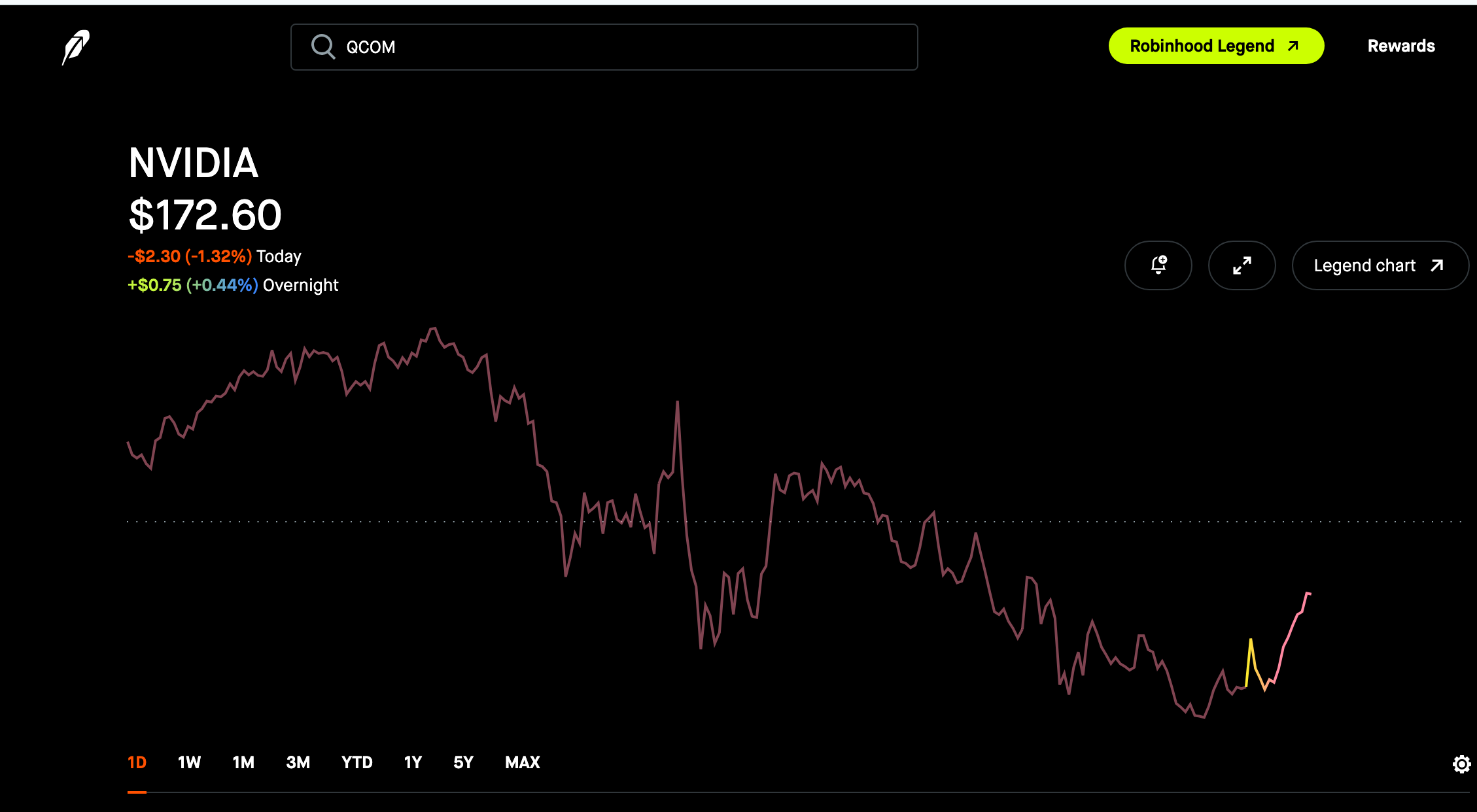
February 5, 2026. NVIDIA trades at $172.71, down from recent highs near $180, up from $100 twelve months ago. Your portfolio—tech-heavy, systematically built on quality companies bought during weakness—has doubled. The strategy works: research fundamentals first, buy when others panic, hold through noise.
But NVIDIA presents a problem. Not because it’s weak. Because it’s expensive.
The stock has run. The entire sector has run. And now the options market—that three-dimensional landscape of strike prices, expiration dates, and institutional positioning—is telling you something you need to hear: the next six weeks contain two inflection points that will determine whether this is a buying opportunity or a value trap.
Mark your calendar.
February 25, 2026: Fiscal Q4 earnings. The company will report results for the quarter ended January 25. Analysts expect data center revenue to remain above 90% of total sales, gross margins near 73%, and confirmation that the $500 billion backlog is converting to actual shipments. The bar is high because it’s always high. NVIDIA doesn’t get credit for meeting expectations anymore.
March 16-19, 2026: GTC 2026 in San Jose. CEO Jensen Huang will unveil the Rubin platform in detail—the hardware and software co-design that’s supposed to make current-generation inference costs look primitive. This is the vision catalyst, the moment when Wall Street decides if the next growth wave is real or if we’ve reached the top of the S-curve.
Between now and those dates, you do nothing. You watch. You wait for the signal.
Reading Fear Across Time
The options chain is not a crystal ball. It’s a map of collective institutional anxiety, expressed in dollars per contract.
Take the April 17 expiration—71 days from today, carefully positioned to capture both the earnings release and the GTC conference. At the $180 strike, calls (bets on upside) cost $11.50. Puts (protection against downside) cost $18.20. The ratio: 1.58x.
Move to the $185 strike. The disparity widens. Puts cost $21.25. Calls cost $9.60. Ratio: 2.21x.
This isn’t subtle. Institutions are paying 58% to 121% more for downside protection than equivalent upside exposure. But the critical question—the one that separates signal from noise—is whether they’re worried about next week or next year.
You pull up the term structure, the relationship between implied volatility and time to expiration. In a typical “buyable fear” event, short-dated options spike while long-dated options remain calm. The pattern screams: “We’re worried about this specific announcement, but the business is fine.”
NVIDIA’s term structure is flat. Near-term volatility: 40-42%. Three-month volatility: 43-45%. Long-term volatility: 46-48%.
Flat means structural. It means institutions aren’t just hedging an earnings call. They’re hedging a regime change.
This is not the pattern you’re looking for. Not yet.
The QCOM Precedent
Rewind three weeks. January 28, 2026. Qualcomm—solid semiconductor company, strong fundamentals, bleeding down 12% through the month—shows a 1.76x put/call ratio one week before earnings. Analysts are nervous. Guidance could disappoint. Supply chain issues with DRAM shortages might crater Q2.
But look closer. The three-month options show 1.30x. Still elevated, but notably calmer than the one-week panic.
This is the pattern: temporary fear, not structural rot.
February 4, 4:30 PM. Earnings hit. Record revenue. Beat expectations. Strong execution across the board. The stock drops 10% in minutes. Forward guidance warns of Q2 weakness due to memory component shortages—an external supply chain problem, not competitive failure.
February 5, 6:30 AM. Before the market opens, you check the options again.
The numbers have flipped.
May expiration, $145 strike: Put/call ratio drops to 0.73x. Calls are now MORE expensive than puts. The $135 strike: 0.28x. Calls cost 3.6 times what puts cost. The term structure has inverted. The market that was terrified of Q1 earnings is now aggressively positioning for summer recovery.
You set limit orders at $134 and $137. Not market orders—limits. You’re busy. You run a nonprofit building AI tools for education and public health. You teach graduate courses. You mentor students designing protein structures and detecting pathogens in wastewater. You don’t have time to watch every tick.
The limits execute immediately at $132.50 when the market opens. By 12:30 PM, the stock trades at $139.
Gain: $1,300 in 180 minutes. But the number isn’t the point. The framework is.
The volatility surface predicted near-term puts would cheapen, longer-dated calls would get expensive, the opening would test lows then stabilize, and recovery would begin immediately due to mechanical dealer rebalancing. Every prediction validated in real time.
One question remains: Is this repeatable?
The Three-Component System
You’re not trading options. You’re reading them.
This distinction matters because options are expensive, volatile, and require precision timing that a busy operator can’t provide. But options prices contain information—institutional positioning that reveals when “smart money” changes its mind about a stock’s near-term trajectory.
The framework has three components.
Component One: Fundamental Research
Done once, deeply. Understand the business model. Assess durability. Know what constitutes a “good” versus “bad” outcome. For NVIDIA: margins above 70%, data center revenue above 85% of total sales, backlog converting to shipments. You’re not worried about NVIDIA becoming a penny stock. It won’t. The AI infrastructure buildout is real, the technical moat is formidable, and the $500 billion order book provides a floor.
But the same company can be a bad buy at the wrong price.
Component Two: Options as Sentiment Gauge
Not a trading vehicle. A reconnaissance tool. When institutions are nervous, put prices rise. When fear is temporary (elevated near-term, calm long-term), it creates opportunity. When fear is structural (elevated everywhere), it signals caution.
The term structure tells you which kind of fear you’re looking at.
Component Three: Event-Driven Attention
You can’t watch Bloomberg all day. You set calendar alerts for known catalysts—earnings, conferences, regulatory decisions. You check your watchlist around those specific dates. You spend one hour every six weeks instead of one hour every day.
This is opportunistic capital deployment for operators who have other jobs.
What NVIDIA’s Options Are Saying Now
The April 17 chain is defensive. Put premiums 1.5 to 2.2 times call premiums. Term structure flat or slightly ascending. Implied volatility at 49.79%, sitting at the 41st percentile of its 52-week range—elevated in absolute terms, moderate relative to history.
The VIX hit 21.11 on February 5, up 13.25%. When macro volatility rises, elevated put skew in tech stocks often becomes a sector-wide phenomenon rather than an idiosyncratic signal. Broadcom’s put/call ratio: 1.18. AMD crashed on February 4. Qualcomm dropped 10% on guidance. The fear in NVIDIA is not unique.
The term structure is telling you: institutions are uncertain about the next six weeks, not panicking about the next six days.
This is not a QCOM-style setup. Not yet.
The Catalysts That Matter
February 25 will answer specific questions. Can NVIDIA maintain 73% gross margins as Blackwell ramps? Is the $500 billion backlog converting at expected rates? What does management say about customer appetite for the next platform?
If the stock gaps down on this news—if headline disappointment triggers a sell-off—you’ll check the options chain the next morning. Not the stock price. The options.
You’re looking for the flip.
Near-term puts that were expensive should suddenly cheapen. Longer-term calls should become expensive relative to puts. The term structure should invert from “defensive everywhere” to “recovery expected.”
If that pattern appears, you’ll know what institutions know: the fear was specific to the catalyst, the uncertainty has resolved, and the mechanical forces of dealer repositioning will create buying pressure regardless of headline sentiment.
If the pattern doesn’t appear—if fear persists or worsens—the options market is telling you the concerns were legitimate.
Same company, different outlook. Readable in real time.
March 16-19 offers a second checkpoint. If GTC 2026 delivers a credible vision for the next compute platform, but the stock remains below $180 and options remain defensive, you’re looking at a disconnect. The market hasn’t adjusted to good news. That’s opportunity.
If GTC raises more questions than it answers—if “Token Economics” and ROI scrutiny persist—the defensive positioning was correct.
The Discipline of Waiting
This is the hard part. Not the analysis. The waiting.
You have $24,526.70 in buying power showing on your Robinhood screen. You could deploy it now. NVIDIA at $172 isn’t expensive by historical standards. The company is executing. The long-term thesis is intact.
But the options market is telling you something you need to respect: the next six weeks contain meaningful uncertainty. Institutions with billions at stake are paying premium prices for protection. They might be wrong—institutional consensus is often wrong at inflection points—but they’re rarely paying 2.21x ratios for no reason.
The framework says: watch, don’t touch.
Set your alerts. February 25, evening—read the earnings release. February 26, morning—check for the flip. March 16-19—skim the GTC keynote. March 17 or 20—final assessment.
Total time commitment: 65 minutes over six weeks.
If the signal triggers, you’ll deploy capital with conviction. If it doesn’t, you’ll move on. Either outcome is a success because you’re not sitting in a position hoping it works out. You’re waiting for evidence.
The Uncomfortable Truth About Markets
Markets are neither perfectly efficient nor totally exploitable. They exist in the messy middle ground where information flows unevenly, where mechanical forces create temporary patterns, where crowds occasionally overreact to headlines.
Qualcomm on February 4 versus Qualcomm on February 5 proves this. Nothing fundamental changed. The business performed exactly as expected, then warned about an external supply chain constraint everyone could see coming. The stock dropped 10%.
But the options market had already priced this in. The 1.76x put/call ratio in the week before earnings said: “We know something’s wrong.” When the specific fear materialized and resolved, positioning flipped within hours. The stock bounced 4.9% by noon.
NVIDIA faces a similar test. The business is strong. The options are defensive. The resolution comes in six weeks.
You could ignore the options and just buy quality at reasonable prices. That’s a valid strategy. It compounds wealth over decades.
But if you’re watching a watchlist of tech positions that have doubled in two years, and you’re trying to identify the next high-conviction deployment, and you’re busy enough that you need mechanical triggers rather than constant monitoring, the options chain gives you something valuable: a calendar.
Not predictions. Not certainty. Just dates when information will crystallize and positioning will adjust and opportunity might appear.
February 25. March 16-19. Mark them down.
Between now and then, NVIDIA stays on the watchlist. Quality company, strong fundamentals, defensively priced options. All three components acknowledged. One component still missing.
The flip.
When it comes—if it comes—you’ll know within 15 minutes of checking the chain. The same pattern that worked for Qualcomm, playing out in real time. Or it won’t come, and you’ll know that too, and you’ll delete the alert and move on.
This is what using options as a sentiment gauge looks like in practice. Not trading them. Reading them. Letting institutions with billions at stake tell you when they’re changing their minds.
And waiting for the evidence before you deploy yours.
The number on your screen is still 1.58. It means: not yet.
Check again in three weeks.