


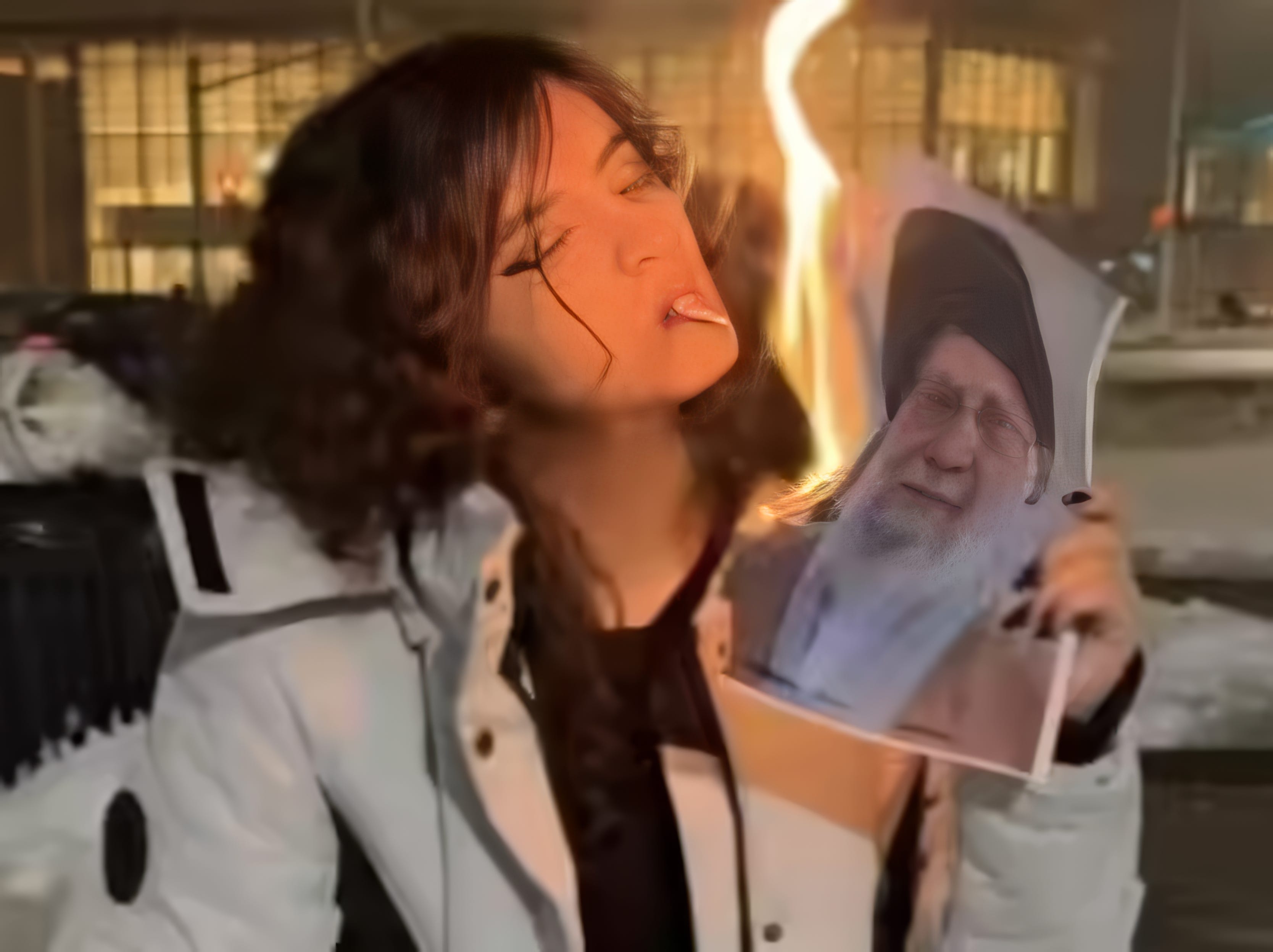
On January 8, 2026, at 8:30 PM Tehran time, the internet went dark across Iran. Not slow. Not throttled. Dark. Ninety-nine percent of the country—92 million people—severed from the world in under an hour. By the time the digital blackout lifted two weeks later, somewhere between 3,117 and 36,500 people were dead, depending on whose numbers you believe. The Iranian government claims the lower figure. Leaked documents from the Ministry of Health suggest the higher one. Dr. Amir Parasta, coordinating a network of Iranian physicians, documented 30,304 deaths in just the first 48 hours—bodies arriving at hospitals in Tehran, Karaj, Mashhad with close-range gunshot wounds to the chest, eyes, genitals.
You cannot film a massacre if you cannot send the footage. You cannot coordinate a protest if you cannot access Telegram. You cannot tell the world you are dying if the world cannot hear you scream.
This is the context in which Nik Bear Brown, an Associate Teaching Professor at Northeastern University, sat down in Boston, Massachusetts, to write a song in Persian—a language he does not speak.
The Arithmetic of Futility
Brown’s tweets about Iran get, on average, zero engagement. Sometimes one like. Maybe a retweet from a bot. His YouTube channel, Musinique, has accumulated millions of views across hundreds of videos—spoken word music, protest songs, educational content blending technology and social justice under his recored label “Musinique.” But Twitter is a void. He knows this. He tweets anyway. Then he stops tweeting and starts building something else.
The song is 56 words in Persian, repeated four times. Three minutes and forty seconds of the same verse cycling like a prayer wheel, like a funeral rite, like the way grief circles back on itself when there is nothing left to say except the same thing over and over: we are mourning, we are still here, we refuse to forget.
بیا که گریه کنیم برای جانانها
Come, let us weep for the beloved ones
The word جانانها (janān-hā) carries weight that English cannot fully capture. Jān means soul, life-force, the essence of being. Janān transforms it into “beloved” or “sweetheart”—the plural makes it collective. These are not just “victims” or “casualties,” the sanitized language of Western news reports. These are the beloved ones. The souls. The 17-year-old wrestlers and the 23-year-old rappers and the 28-year-old women shot in Shahsavar and the 15-year-olds from Azna whose families were denied their bodies for days because the state wanted to claim them as martyrs for the regime instead of martyrs against it.
In Persian poetry, janān appears in ghazals about romantic love, divine love, the yearning for what has been lost. Brown is pulling from that literary tradition—the language of Hafez, of Rumi, of centuries of poets who learned to speak about power and resistance through the metaphor of longing. You can mourn the dead under tyranny if you frame it as mourning lost love. The censors might miss it. The people will not.
برای بیمهری به وقت آبانها
For the unkindness in the time of Aban
Bī-mehri (بیمهری) literally translates as “without kindness,” but the word mehr itself is more complex. It means affection, mercy, the sun, the ancient Zoroastrian concept of divine love and covenant. To be bī-mehr is to exist in a state where the social contract has been severed, where those in power have abandoned any pretense of caring whether you live or die. It is cruelty, yes, but it is also betrayal—the specific betrayal of a government that claims to represent you while hunting you in the streets.
“In the time of Aban” (be vaqte ābān-hā) is the temporal anchor. Aban 1398—November 2019—when at least 1,500 protesters were killed and the internet was shut down for a week. The word is plural: ābān-hā, “the Abans,” suggesting not one event but a recurring cycle. There was Aban 1398. Now there is Aban 1404 (the Persian year for January 2026). The massacres repeat. The state’s indifference repeats. The people’s grief accumulates like layers of sediment, burying the dead under the dead under the dead.
بیا که گریه کنیم
Come, let us weep
The imperative. The invitation. Biyā—come. Not “I will weep” but “let us weep together.” Collective mourning as collective action. In Iranian culture, public mourning is political. The rawzeh-khani ceremonies, where communities gather to mourn the martyrdom of Imam Hussein, have historically been spaces where grievances against power are articulated through religious metaphor. The state knows this. That is why they confiscate bodies. That is why they bury protesters in unmarked graves. That is why they charge doctors with “waging war against God” for treating the wounded. Mourning is dangerous when it becomes communal.
The phrase repeats: let us weep, let us weep. Not once as a gesture, but over and over as insistence. Weeping is not weakness. Weeping is the refusal to normalize. Weeping is the act of saying “this should not be, this should not be, this should not be” until your voice gives out.
که گریه میخواهد این ابر خشکیده برای بارانها
For this dried cloud longs for rain
Here is the core metaphor, the image that anchors the entire song. Abr-e khoshkide—the dried cloud. A cloud that has been drained, depleted, wrung out until it has nothing left to give. Clouds are supposed to bring rain. That is their function, their purpose. A dried cloud is a broken thing, a contradiction, something that exists in a state of failure.
The cloud is the people. Exhausted by 2009. Exhausted by 2017. Exhausted by 2019. Exhausted by 2022. Exhausted by decades of economic strangulation, environmental collapse, repression, isolation, the endless cycle of rising up and being crushed. And yet they gather again. They take to the streets again. They face the bullets again. Because what else is there to do? Disperse permanently? Evaporate? The cloud longs for rain even when it has no rain left to give.
Rain means release. Rain means healing. Rain means the end of drought, the renewal of the land, the possibility that something can grow again. Rain means justice. Rain means the moment when the accumulated pressure finally breaks and the sky opens and everything that has been held back comes pouring out at once. The protesters long for this. The dried cloud longs to fulfill its purpose, to be what it was meant to be, to bring life instead of carrying death.
But there is no rain yet. Only the longing. Only the gathering. Only the repetition of the same demand, the same grief, the same refusal to accept that this is how things must be.
The song repeats this verse four times. Not because Brown ran out of things to say, but because this is what there is to say. In liturgy, in ritual, in the structure of communal mourning across cultures, repetition is not redundancy. Repetition is how you make space for grief that is too large to process in a single utterance. You say it again. And again. And again. Until the saying itself becomes the act of resistance, the proof that you are still here, still mourning, still refusing to let the beloved ones be forgotten.
Fifty-six words in Persian. Repeated until they become a mantra, a memorial, a refusal. This is the song that will exist in the archive when someone searches for what happened in Iran in January 2026. This is what Brown built while his tweets disappeared into the void.
The Grammar of Oppressed Peoples
The technical approach matters because it reveals the problem Brown is trying to solve. He is not Persian. He cannot write Persian poetry with the rhythmic sophistication of classical ghazals or the political weight of modern protest verse. What he can do is use AI—specifically, large language models—to work from historical Persian poems, extracting phrases that carry centuries of literary weight, then reshaping them into something that resonates with the present horror.
“Come, let us weep for the beloved ones” appears in old Persian texts—poems about loss, about mourning, about the distance between what is and what should be. Brown did not invent this phrase. He found it, recognized its power, and understood that it could carry the weight of January 2026 because it had already carried the weight of centuries of other griefs. This is not theft. This is the way protest music has always worked: taking the language that already exists in the cultural memory and pointing it at the present crisis.
Brown trained a vocal models trained on samples of his voice to sing this in a fusion of avaz—the Persian classical vocal tradition—and American country gospel. Both emerged from communities processing collective trauma. Both use melisma, call-and-response, communal mourning. Both served as encoded resistance when open resistance meant death. He is not appropriating; he is finding the universal grammar that oppressed peoples use to refuse silence.
The repetition is not laziness. It is liturgical. Laments are supposed to repeat. Jewish Kaddish repeats. Black spirituals repeat. Greek funeral rites repeat. Persian rawzeh-khani repeats. You create space for collective grief by giving it a structure to inhabit.
The Starlink Problem
Here is what “digital isolation” means in practice: on January 8, as millions of Iranians took to the streets in response to Reza Pahlavi’s viral call for coordinated protest, the regime positioned snipers on rooftops across Tehran, Karaj, Mashhad. Security forces fired DShK heavy machine guns—weapons designed to destroy vehicles—directly into crowds. In Tehranpars, a neighborhood in eastern Tehran, protesters filmed security forces shooting from the roof of a police station as people fled. One voice on the footage warns: “Put your phone down. They will shoot your hand. There are snipers among them.”
Then the phones stopped working.
Elon Musk’s Starlink attempted to restore connectivity. The regime deployed military-grade jammers. They sent agents to hunt for Starlink dishes on rooftops. They created a “White List” system—unfiltered SIM cards for government officials, state media, select business elites. Everyone else: darkness. A glitch in X’s location data later revealed that hardline MPs who publicly defended censorship were accessing Twitter from inside Iran on these privileged SIMs while ordinary citizens risked prison for using VPNs.
This is the world into which Brown is releasing a three-minute song. No one in Iran can hear it. Even if the internet returns, it will likely be “tiered”—a system where access is a class privilege, where universities and state institutions get YouTube while everyone else gets the National Information Network, a closed loop of state-approved content. The regime has made clear this is not temporary. This is the new architecture.
What the Algorithm Ignores
Brown teaches a course called “GIGO”—Garbage In, Garbage Out—about data validation and AI ethics. He runs Humanitarians AI, a nonprofit building AI tools for education and social impact. He makes music under the Musinqiue label because someone told him once that protest songs should sound like they could have been written during any era of resistance. He has spent years developing the philosophy that AI should be used to amplify marginalized voices, not replace them.
Now he is confronting the central problem of algorithmic indifference. Twitter’s algorithm does not care about Iran. It cares about engagement, virality, controversy that fits within platform-safe boundaries. A tweet that says “3,117 killed in Iran” gets zero likes. A tweet that says “36,500 killed in Iran” gets zero likes. The number changes. The silence remains identical.
But YouTube is different. YouTube is searchable. Archivable. Someone looking for “Iran protest songs 2026” six months from now will find this track. Journalists writing retrospectives might use it. Kids in diaspora communities trying to understand what happened to their grandparents’ homeland might stumble on it. Or maybe none of that happens and it just exists as one data point in the historical record, one person refusing to look away.
The regime is counting on exhaustion. They are counting on the world getting bored, moving on to the next crisis, letting Iran disappear back into the category of “places where bad things happen that we can’t do anything about.” Brown is refusing. The refusal has value even if he never sees the results.
The Bodies at Kahrizak
Five videos emerged from the makeshift morgue at the Legal Medicine Organization in Kahrizak, near Tehran, on January 10 and 11. In them, distraught families move between body bags laid out in an outbuilding, trying to identify their dead. Amnesty International analyzed the footage and identified at least 205 distinct body bags across the five videos, accounting for potential duplication. One video shows a screen displaying photographs of the deceased with a changing numerical counter.
These are the beloved ones. جانانها. The martyrs for whom weeping is not weakness but resistance, remembrance, refusal to normalize pain.
Dr. Alireza Golchini, a surgeon from Qazvin, posted his phone number on social media offering free treatment to wounded protesters. Security forces arrested him in front of his family. He is charged with moharebeh—waging war against God—which carries the death penalty. Witnesses at Behesht-e Sakineh graveyard in Karaj described thousands of bodies arriving in refrigerated ice-cream trucks and meat vans, staff ordered to perform mass burials in unmarked pits.
Reza Moradi, 17, a wrestling enthusiast and auto-body apprentice from Azna, was shot in the head and torso on January 1. His family was denied his body for days while authorities tried to label him a pro-government martyr. Another teenager, identified only as Sam, was shot in the back of the head and taken alive from a hospital by security forces. His father found his body on January 11 with a second gunshot wound to the face—a “finalization shot” delivered after he was already in custody.
This is what “unkindness” looks like. بیمهری. Cruelty. Betrayal. Indifference by those in power.
The Question of Solidarity
When Brown says “I don’t think that far ahead, I just try to do something, even if futile,” he is articulating the ethical position of bearing witness. You do not make protest art because you think it will stop bullets. You make it because bearing witness is a moral requirement whether it “works” or not. The regime succeeds when people stop caring, when the massacres become background noise, when Iranian lives become statistical abstractions rather than individual losses.
The question is not whether one song matters. The question is whether silence is acceptable.
Brown could amplify Iranian artists instead. He does—his YouTube channel includes work by Iranian musicians, Persian poetry, content created in collaboration with native speakers. But amplification is not the same as creation. Sometimes solidarity means following, not leading. Sometimes it means making something with the tools you have, even if those tools are imperfect, even if the thing you make might disappear into the void.
The avaz-gospel fusion is an act of cultural translation. It says: the grief of the Iranian people is comprehensible to anyone who has ever mourned under oppression. The Black church and the Persian tekiye both understand that weeping is resistance. Both understand that repetition is not redundancy but ritual. Both understand that when the powerful try to silence you, you sing louder.
What Rain Means
By late January, the internet began flickering back in Iran, but restrictions remained. The Iranian government had reasserted control. President Masoud Pezeshkian declared “calm” had been restored. Hospitals were still overwhelmed. Prisons were still full. Families were still searching for bodies. The rial was still at 1,600,000 to the dollar. Food prices were still up 70%. The Karun River was still being diverted away from Khuzestan. The air in Tehran was still toxic. The structural drivers of the uprising—the “survival phase” of economic and environmental collapse—were all still in place.
The regime had achieved what analysts call a “saturated silence.” Not peace. Not resolution. Just the exhaustion that comes after massacre, when people retreat to grieve and regroup and plan what comes next, because everyone knows it will come next. The cloud gathers again. The regime shoots again. The cycle repeats until something breaks permanently.
“For this dried cloud longs for rain.” The metaphor works because rain means multiple things simultaneously. Release. Healing. Justice. Renewal. The protesters long for change. The land longs for water. The body longs for breath. The cloud longs to do what clouds are meant to do—bring life—but it cannot, because it has been shot full of holes.
Brown uploads the song. It exists now. Searchable. Archivable. A small act in the face of industrial-scale atrocity. He does not know if anyone will hear it. He does not know if it matters. He knows only that the alternative—saying nothing, doing nothing—is not acceptable.
You cannot stop a massacre with a song. But you can refuse to let it be forgotten. You can refuse to let the cloud run dry without documenting what was lost. You can use the platform where you actually have reach—YouTube, millions of views, algorithmic persistence—to ensure that when someone searches for “Iran 2026,” they find something other than silence.
The song is two minutes and forty seconds long. It repeats the same verse four times, the way prayers repeat, the way grief repeats, the way oppressed people have always repeated the same demands—freedom, justice, dignity—knowing they might not live to see them answered but refusing to stop asking.
Come, let us weep. Not because weeping will save us, but because refusing to weep is how the powerful win.
<iframe data-testid=”embed-iframe” style=”border-radius:12px” src=”
width=”100%” height=”352” frameBorder=”0” allowfullscreen=”“ allow=”autoplay; clipboard-write; encrypted-media; fullscreen; picture-in-picture” loading=”lazy”></iframe>


